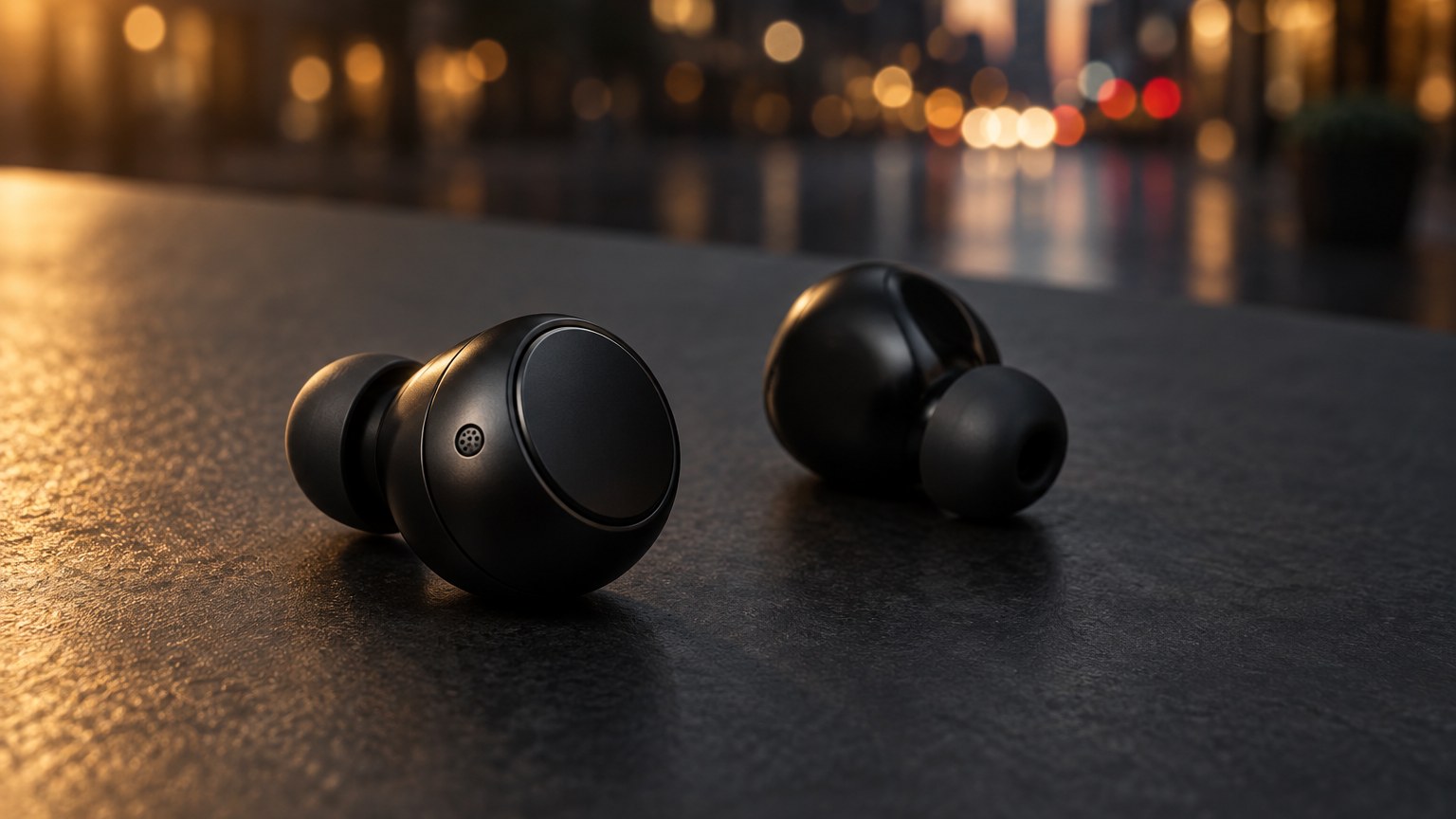
Two acronyms get printed on the same box, and shoppers assume they are competing versions of the same feature. They are not. One works on what you hear. The other works on what the person on the other end of the call hears.
ANC: quiet for you
Active noise cancellation uses outward-facing mics to sample low-frequency noise around you, then plays an inverted waveform to flatten it. It is very good at steady drones: an aircraft cabin, a bus engine, an office AC unit. Expect somewhere between 20 dB and 35 dB of reduction in that band on consumer gear.
It is much less impressive against sudden, high-frequency sound. A colleague laughing, a keyboard, a barking dog — those mostly get through. If someone promises you total silence, they are selling, not explaining.
ENC: clarity for them
Environmental noise cancellation points the other way. It runs on the mic path, using two or more mics plus beamforming to separate your voice from the street behind you. You will never hear the effect yourself. Your team on the call will.
Which is why the two features get shopped for badly. People with a long commute buy ENC and wonder why the train is still loud. People who take calls from a cafe buy ANC and still get asked to repeat themselves.
So which do you need?
Answer one question honestly: are you mostly listening, or mostly talking?
- Mostly listening — commute, flights, focus work: prioritise ANC. Over-ear designs also add passive isolation on top, which is why they still beat earbuds on a plane.
- Mostly talking — sales calls, standups, hands-free driving: prioritise ENC and mic count.
- Both, honestly — look for a set that lists both, like our TWS-X11 ANC+ENC or the TWS-X21 ANC+ENC.
The trade-offs nobody prints on the box
ANC costs battery — typically 15-25% of runtime with it switched on. Some people also feel a faint pressure sensation, like descending in a lift; it is harmless but real, and if you are one of them, no amount of firmware fixes it. Try before you commit to all-day use.
ENC has a subtler failure mode. Aggressive processing can clip the start of words or make your voice sound thin and slightly robotic. Cleaner is not always more natural.
When you can skip both
If you listen at home in a quiet room, ANC buys you very little and you are paying for silicon you will switch off. Put that budget into drivers and fit instead. A well-sealed wired in-ear like the D600R1B Titanium Film blocks a surprising amount of noise with no processing at all.
Pick the feature that matches the room you are actually in most days. Not the one with more letters on the box.