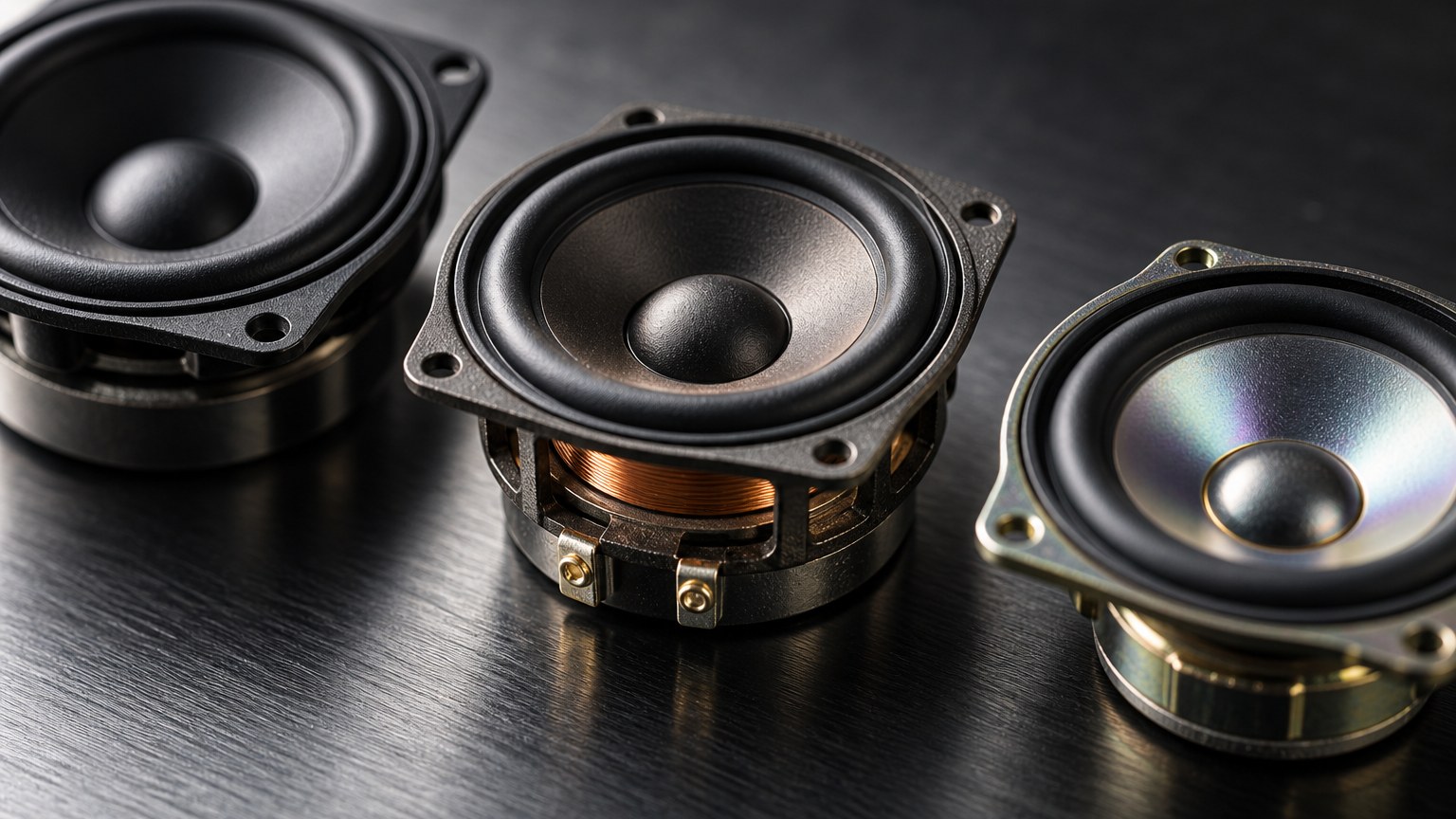
The driver is the small motor that turns electrical signal into air movement. Change it and you change the entire character of a set — more than the shell, the cable, or the marketing copy will.
Dynamic drivers: the default, and that is fine
A coil, a magnet, a flexible diaphragm. Nearly every headphone you have owned used one. Diaphragms in the 6 mm to 13 mm range cover most earphones; over-ear cups run 40 mm and up.
What they do well: bass with actual physical weight, because a bigger diaphragm moves more air. What they do less well: keeping that bass from bleeding into vocals when the tuning chases a heavy low end.
Our D-13 Heavy Bass leans deliberately into that character. If you want a flat reference sound, it is the wrong pick, and we would rather say so than sell you the wrong pair.
Moving iron: fast, tight, less low end
Here the diaphragm is driven by an armature rather than a coil glued to the cone. Less moving mass means the driver starts and stops faster, which shows up as cleaner detail on plucked strings, hi-hats and consonants.
The cost is sub-bass. Moving iron rolls off lower down, so hip-hop and EDM can feel polite. Acoustic, vocal and classical material is where it earns its keep — see the D100T1 Moving Iron.
Titanium film: stiffness where it matters
Coat the diaphragm in titanium and it resists flexing at high volume. A diaphragm that keeps its shape distorts less, so treble stays clean instead of turning brittle when you push it.
The honest caveat: a stiffer diaphragm can read as bright. If you are sensitive to sibilance — that hiss on "s" sounds — a titanium set may fatigue you over a long session. It is a tuning question as much as a materials one.
A shortcut that mostly works
- Bass, movies, gym playlists: dynamic.
- Vocals, acoustic, detail hunting: moving iron.
- Loud listening without harshness: titanium film.
One thing worth saying plainly: fit beats driver type. A premium driver with a bad seal loses more bass than the gap between any two technologies on this page. Get the eartip right first, then argue about diaphragms.